
Wood Chipper Machine Price: Complete Buying Guide
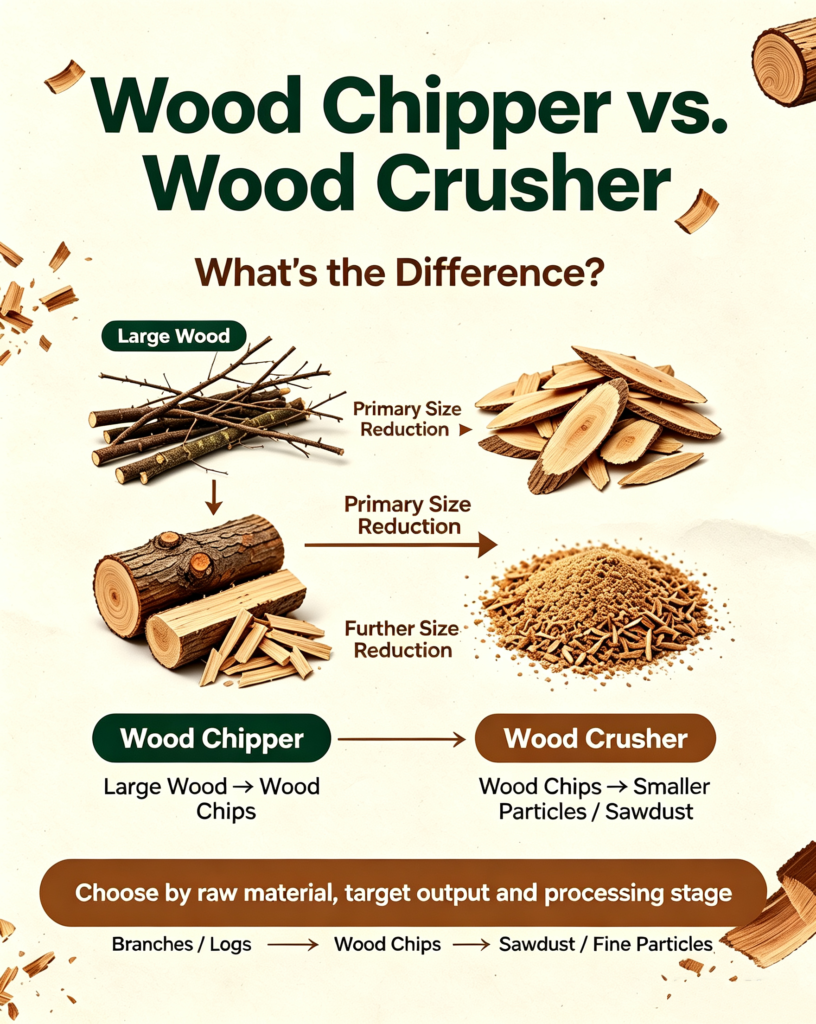
Choosing the right wood chipper is never about picking the model with the highest horsepower or largest feed diameter. For B2B operations handling tree branches, forestry residues, logs and landscaping waste, a mismatched machine leads to low throughput, excessive energy cost, frequent downtime and faster component wear — while a properly matched unit can turn wood waste into profitable, usable materials and cut long-term operating costs significantly.
The selection process always starts with your raw material, not the machine itself. First, define your feedstock type and its typical properties: fresh or dry, hard or soft, and most critically, its average and maximum diameter. Always select a machine with a reasonable capacity margin instead of sizing it to your single largest piece of wood, as real-world materials vary widely in hardness and shape.
For production capacity, calculate your required throughput with a simple formula: **daily processing volume ÷ working hours = required tons per hour**. Avoid running a machine continuously at its maximum rated output; reserve buffer capacity for loading gaps, material variation and routine maintenance.
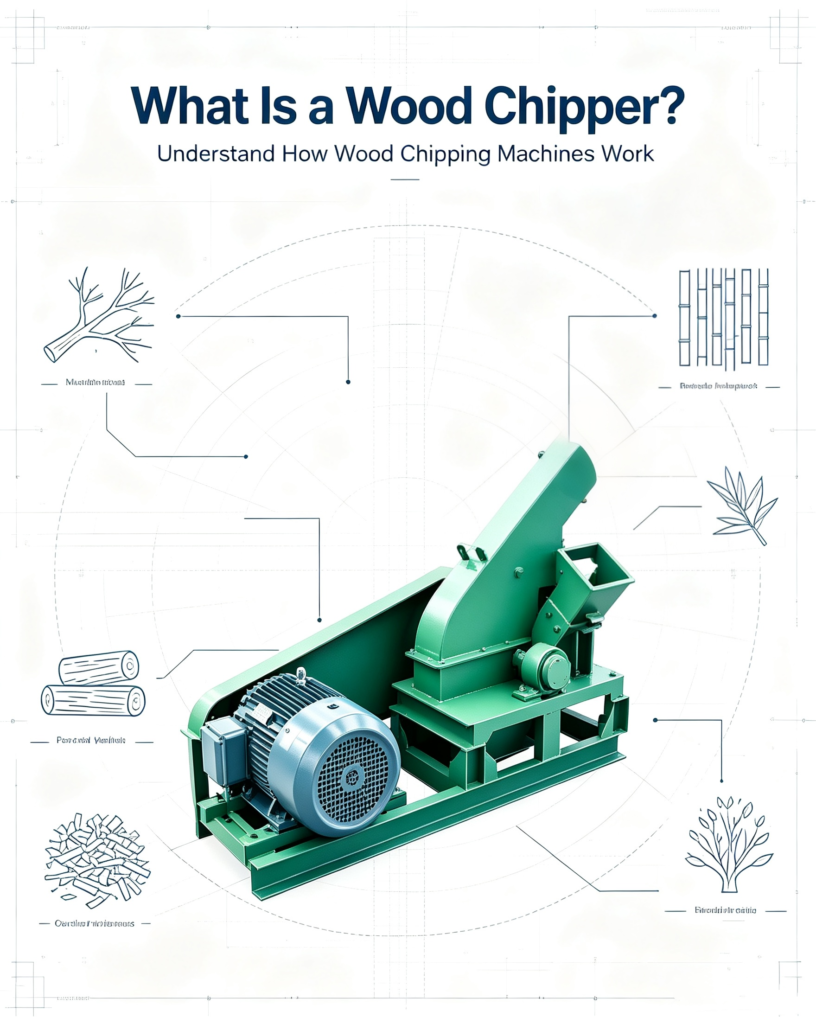
Beyond core specifications, factor in power source (electric for fixed facilities, diesel for mobile/remote sites), mobility (trailer-mounted for multi-site jobs, stationary for in-plant processing), and total cost of ownership. Purchase price is only one part of the investment: blade replacement, bearing maintenance, spare parts availability and downtime all shape long-term operating costs.
For businesses planning ahead, also leave room for future production growth. The best wood chipper balances your current needs, long-term goals and actual working conditions — not just the specs on a spec sheet.